Unknown's avatar

About Plant Some Joy

Spread joy with fun and easy ways to add plants to your life.

Doves on the swing

Birds enliven our gardens. They fly, dart, and interact with one another. Their songs add beautiful sounds. They are helpful to us gardeners as they eat huge amounts of insects, especially while raising chicks, which helps keep their numbers in balance. It’s a delight to find nests in trees and shrubs when the leaves fall in autumn. I love to look closely to see how birds wove found bits into the nest structure: twigs, grass blades, and even ribbons of littered paper and plastic. Once I found a string still tied to bamboo skewers I had used to mark seeds I direct-sowed in the spring garden. I had wondered what had happened to that little rig…

If we’re lucky, birds make their nest where we can witness the construction process, along with eggs and raising of chicks.

A few days ago, I hung hummingbird feeders as I usually do in mid-April to welcome the weary little birds on their return north. As I stepped onto the front porch, feeder in hand, I nearly collided with a mourning dove, who flapped madly to get out of my way. I then noticed a puzzling amount of sticks and tangles of dried grapevine on the porch floor, and looked up. In the swing, still hung high for the winter, was a flat, haphazard nest with one white egg poking up. Robins have tried to nest in this same spot before, but I removed the start of those nests and lowered the swing to discourage them. But I was too late to dissuade these birds.

Mother dove is now a constant presence incubating her egg (or maybe eggs by now) just outside our living room window. We carefully peek to see how she’s doing, and she replies with a blink of her big dark eye. According to the Cornell Ornithology Lab website (https://www.allaboutbirds.org/guide/Mourning_Dove/id), it will be another week before the chicks hatch, then another couple weeks until they fledge. Guess we won’t be using our porch swing for a while.
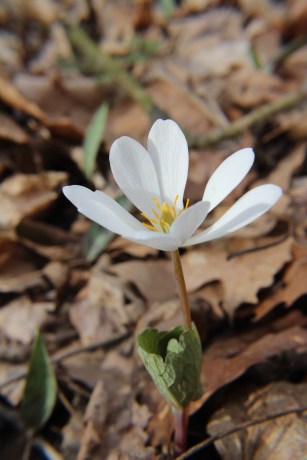
Find of the day: Bloodroot

Take a walk in the woods this time of year and you might spy this tiny beauty, bloodroot. I found one today along a stream bank in a low moist woods. And I mean one—there waIMG_7573sn’t another in sight. I was especially lucky to find it since bloodroot only blooms for a day or two.
Bloodroot (Sanguinaria canadensis) is a North American ephemeral wildflower that emerges in rich woods in late winter and early spring. Spring ephemerals flower and set seed quickly, before the trees leaf out to take advantage of sunlight, then go dormant once summer heats up. Other spring ephemerals include trillium, trout lily, Virginia bluebells, spring beauties, and Dutchman’s breeches.

As you can see, the leaf on this bloodroot was still wrapped around the stem, which is typical. The fragile flower opens during the day and closes at night, then fades after a day or two. The solitary leaf unfurls, displaying its unique deeply cleft shape, then grows to about 12-14 inches tall.

Bloodroot is in the poppy family and gets its name from the red-orange juice in its stem and roots. Native Americans used the juice to dye clothing and baskets, and for war paint. They also used it to treat aches and fevers, ringworm, ulcers, and skin infections. Alkaloid compounds in the juice are possibly useful for dissolving warts and reducing plaque on teeth, however it believed to be too toxic to be ingested.

If you have a moist woodland spot on your property, consider planting some bloodroot. It can be found at specialty native plant nurseries, such as Prairie Moon Nursery (prariemoon.com). Not only will you be charmed by its delicate, fleeting beauty, the winter-starved bees will welcome the early pollen and nectar it provides.

Miraculous seeds

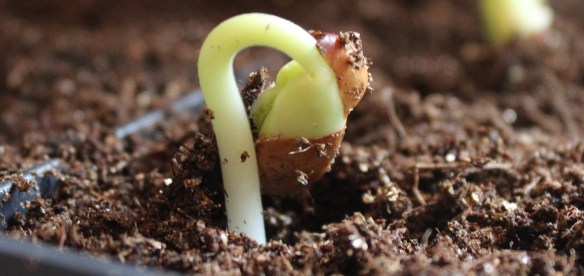
Looking for a miracle? Just start some seeds. This determined little bean seedling emerged today from a seed that, a few days ago, looked like a wrinkled pebble. It’s hard to believe this vigorous little life was inside that dried-up orb.

seedlingSeeds contain everything to start a new plant–root, shoot, and two little seed leaves called cotyledons. Plus all the DNA that will determine the plant’s form, habit, flower color, fruits, and other attributes.

Give a seed a little moisture, light, and warmth and presto–new life erupts. How can you not believe in miracles when you watch a seed germinate?


Feeling seedy

Despite the warm winter here in Pittsburgh, I—like many gardeners—have cabin fever. I’ve hit the problem head on with some retail therapy: my annual seed order.

I’m determined to grow fantastic onions this summer so I bought Walla Walla onion seeds from a loimg_61701cal garden center. Sure, I’ve grown nice onions before by purchasing ‘onion sets’ and plugging them into the garden. The resulting onions were fine, but not fantastic. I’m going for fantastic.
I learned from fellow master gardener Paul Pietrowski to choose long day onion varieties for our climate. He’s had the most success starting them from seed, rather than sets. So today I sowed the Walla Walla seeds in moistened, sterile seed starting mix. I’ll plant the seedlings outside in the garden after 8-10 weeks.

I ordered Italian ‘San Marzano’ tomato seeds from Renee’s Garden. I’m excited to try those for making sauce, as well as a new red beet, ‘Sweet Merlin.’ I’ll turn a packet of ‘Roma Improved’ beans into jars of pickled dilly beans.

Three interesting flowers caught my eye in the Select Seeds catalog. I’m excited to try ‘Chinese Giant Orange’ amaranth, which gets 8 feet tall and provides lots of seeds for birds. There is also a cool Queen Anne’s lace I’ll grow called ‘Dara.’ The blooms start out white, like regular Queen Anne’s lace, but turn pink and purple as they age. It’s a great plant for pollinators too. I saw the curious corkscrew vine on a visit to Bartram’s Garden in Philadelphia last summer. This fragrant climber is in the bean family and hails from South America.

How about you? Have you ordered seeds yet? What are you excited to try this year? !

It’s primrose time

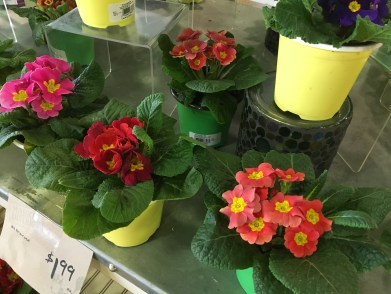
I’m a sucker for the colorful displays of primroses that pop up in grocery stores this time of year. Who can resist those charming flowers in the middle of winter? I usually buy several and cluster them in a basket or decorative pot for some indoor cheer. It’s a lot of joy for less than ten bucks.

img_6095

If you fall prey to their spell too, be sure to water them regularly since they like to be moist. If the soil dries out so much that the plant wilts and water runs right through the pot don’t despair. Fill a container that is taller than the pot with water and set the pot in it. If the pot bobs on top, gently push it below the surface of the water for a minute. You may see air bubbles coming out of the pot, which is ok. Let the pot sit in the container of water for a 30-60 minutes to completely moisten the soil again, then remove it and let it drain in the sink.

Place your primroses out of direct sunlight. As the flowers fade, carefully clip them off with scissors. You may notice new flower buds forming under the old flowers. Feeding occasionally with a general-purpose flowering houseplant food will keep your primroses blooming for weeks. Just be sure to follow all label directions carefully.

Amazingly, grocery store primroses can assume a second life as a garden plant if you live in USDA hardiness zones 3-8 (winter temperatures to -35 degrees F). Keep them moist indoors until the weather warms up, then plant them in the garden once frosts are passed. They like a partly shady spot and moist but well-drained, humus-rich soil.

Like fall mums, getting grocery store primroses to come back year after year is a bit of a crap shoot. I’ve had some success planting them in a partly shady patch under some shrubs. The soil here is loose and rich from years of applying bark mulch. These outdoor primroses bloom a bit later than the ones in the grocery store, since those are forced in greenhouses.

Next time you shop for groceries, look for these little cuties in the floral department. At the very least they will bring some cheer to these gray winter days.