It’s a girl!

For the last 20-plus years, we’ve referred to the eastern box turtle that visits our garden every June as ‘Ernie.’ (See my post about wildlife in the garden.) But last night we learned that Ernie is a female turtle when I discovered her laying eggs in the herb garden. And so, we have rechristened her ‘Ernestina.’ (‘Ernestine’ seemed a little dowdy for such a special creature, and she is certainly worthy of the extra syllable.)
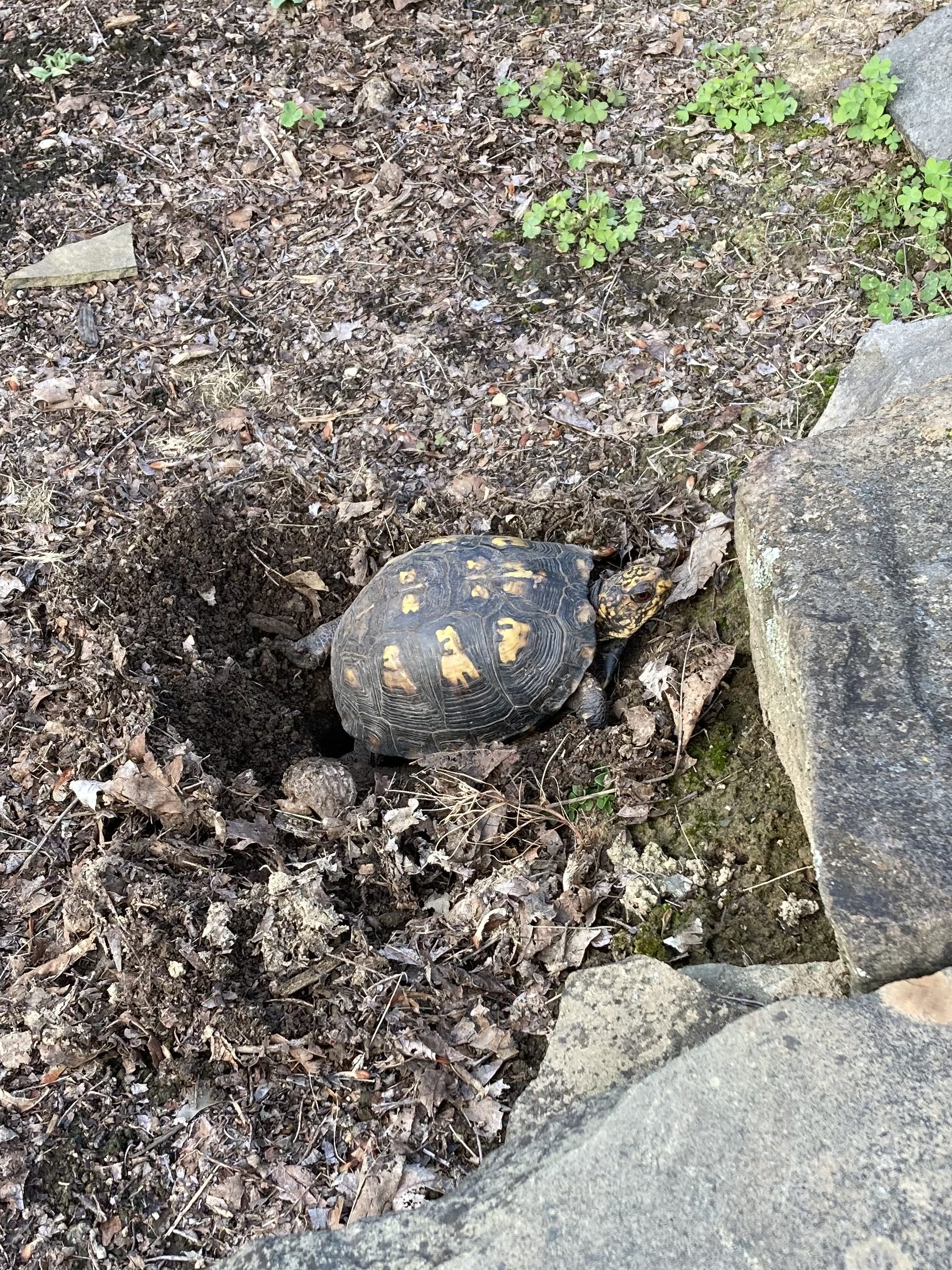
Ernestina digging a nest.

Just after sunset yesterday, I found Ernestina in an empty patch of soil where I usually plant basil (haven’t gotten around to that yet). I missed her usual appearance last year so was glad to see her alive and well. I didn’t hang around long, she’s not crazy about people. When I checked on her later, I noticed something was different from all the other times I had come across her, usually looking annoyed or head-down, Greta Garbo-like in a shallow burrow of leaves, pine needles, or soil in the vegetable garden. This time she had dug several inches into the soft soil and her butt was in the deep end and her head and front legs were on the surface. She was making a slow rocking motion, and her back legs were pushing soil around. She did not draw her head and legs into her shell as she usually does when we meet. Clearly, eggs were happening!

I consulted various conservation websites and learned that Ernestina’s behavior was classic for a turtle of egg-laying age (typically not until they are 8-20 years old). She had dug two other shallow depressions nearby until settling on the final spot for her nest. She laid her eggs in soft soil near the top of a hill in an open space where they would be warmed by the sun (hatchling sex is determined by soil temperature–warm sites result in female hatchlings, cool sites males). I also learned that few box turtle eggs survive since they are irresistible to racoons, skunks, snakes, coyotes, and crows—all of which frequent our garden.

Ernestina’s beautiful finished nest.

I checked on her one more time around 11 pm and she was still in the nest. In the morning, she was gone, which wasn’t surprising since Eastern box turtles take a hands-off approach to parenthood. I was relieved to see her beautiful nest undisturbed—she had completely covered the eggs and topped them with a slight mound of soil and leaves. I knew I had to take it from here if Ernestina’s babies had any chance of survival.

Nest box in progress.

I found plans online for making a mesh box to protect the nest and eggs and quickly put one together (the plans I used are at https://wiatri.net/Inventory/WiTurtles/Volunteer/Images/ProtectingTurtleNests.pdf). As we carefully installed the box over the nest, we disturbed a large ant colony and a wolf spider carrying her egg sac on her back. This little spot was a hotbed of egg-laying! We put some temporary rocks around the base of the cage to discourage predators digging, but will remove them in about a month so as not to impede the baby turtles. With any luck, they will hatch in 45-90 days.
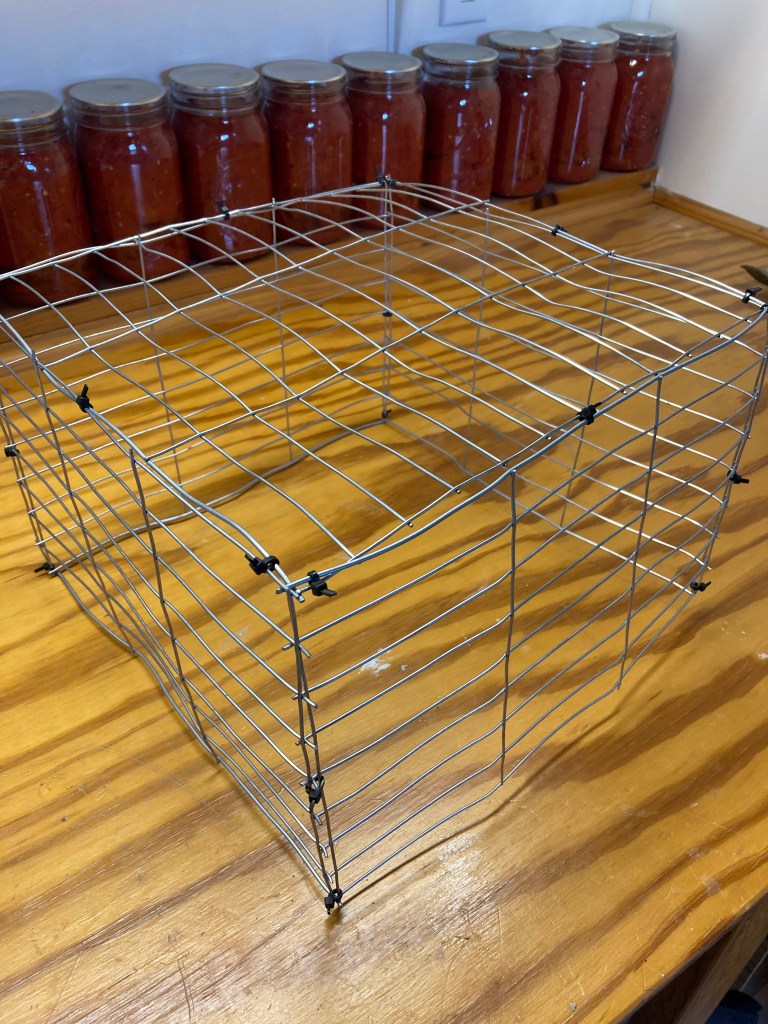
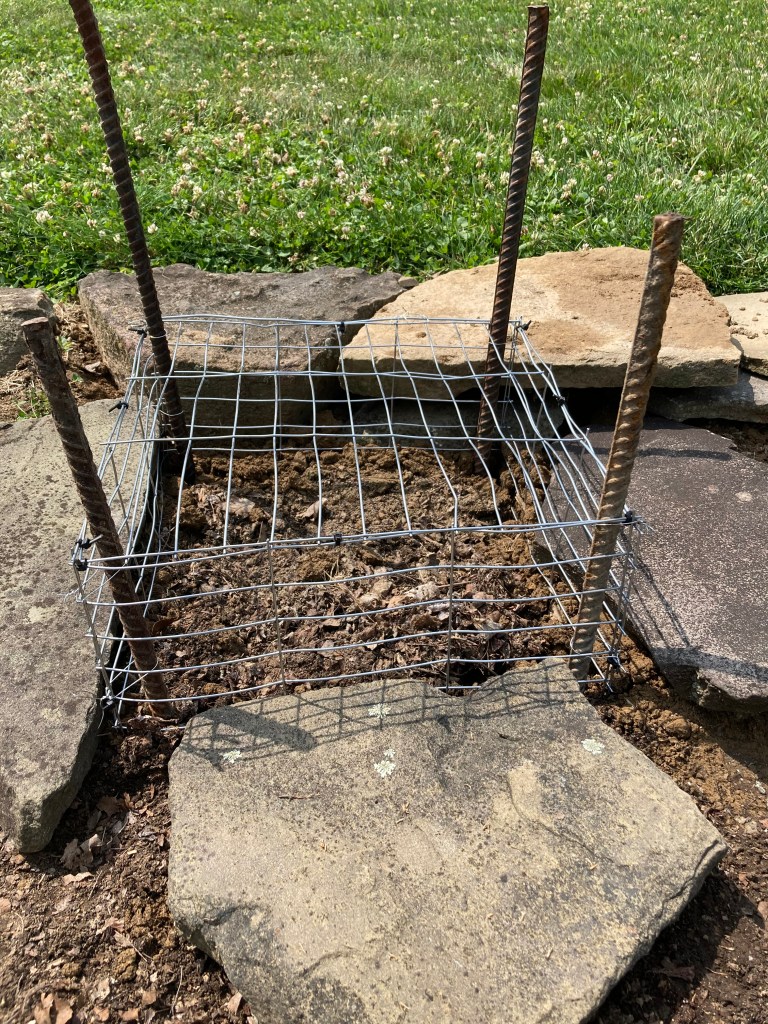
Finished nest box and once placed over nest. I’ll remove stones closer to the hatch date.

For more information about the Eastern box turtle, visit https://www.nwf.org/Educational-Resources/Wildlife-Guide/Reptiles/Eastern-Box-Turtle.
Garden hopes and dreams

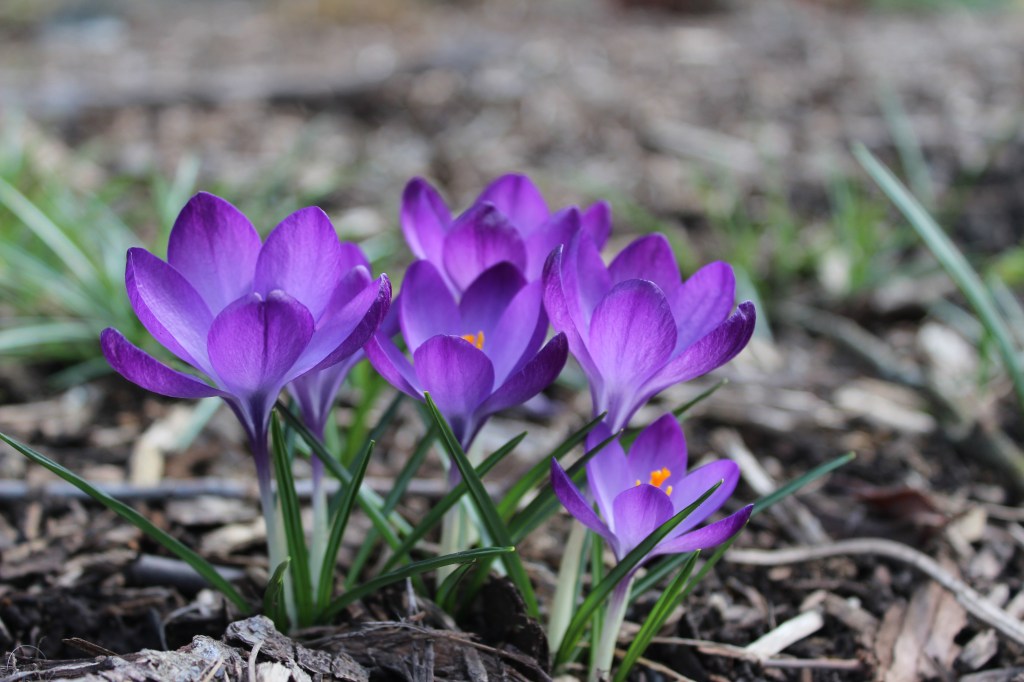
Spring crocus will be blooming soon.

We’re all feeling it—the need for spring.

One morning this week, shortly after dawn while taking the compost out, I heard a robin singing a spring song. It was sharp and clear in the cold air with nothing else stirring. Later I bundled up and poked around the garden, looking for more spring. I was not disappointed. The hellebores are starting to pull their green flower buds from the frozen earth and a scattering of snowdrop tips have appeared. I pushed a couple heaved heuchera back in the ground, gathered up some plant tags that were blowing around and headed back to the warm house and a cup of tea.

Gardeners always look forward to spring. Sure, I’m glad to hang up my tools in November and take a break, but by mid-January I’m cracking the seed catalogs and dreaming about what to grow. And this spring, more than almost any other, will be most welcome.

Our gardens provided so much in 2020, not the least of which a place to forget about the pandemic as well as political and civil unrest. Our gardens gave us ways to learn, share, observe and succeed. We found beauty, wonder and a connection to the natural world that was more critical than ever. Our gardens provided sanity and peace.

While I enjoy winter and a break from gardening, I have missed the garden. I welcome the lengthening days, the birds staking out their territory and the winter flowers starting to bloom. More than anything else, I welcome the hope of this spring: hope that the spectre of the virus will wane sometime this year, hope that political and civil unrest subsides and hope that we as a country can bridge our many divides and work together to make things better.

I wish you good health and a great gardening year!

Doves on the swing

Birds enliven our gardens. They fly, dart, and interact with one another. Their songs add beautiful sounds. They are helpful to us gardeners as they eat huge amounts of insects, especially while raising chicks, which helps keep their numbers in balance. It’s a delight to find nests in trees and shrubs when the leaves fall in autumn. I love to look closely to see how birds wove found bits into the nest structure: twigs, grass blades, and even ribbons of littered paper and plastic. Once I found a string still tied to bamboo skewers I had used to mark seeds I direct-sowed in the spring garden. I had wondered what had happened to that little rig…

If we’re lucky, birds make their nest where we can witness the construction process, along with eggs and raising of chicks.

A few days ago, I hung hummingbird feeders as I usually do in mid-April to welcome the weary little birds on their return north. As I stepped onto the front porch, feeder in hand, I nearly collided with a mourning dove, who flapped madly to get out of my way. I then noticed a puzzling amount of sticks and tangles of dried grapevine on the porch floor, and looked up. In the swing, still hung high for the winter, was a flat, haphazard nest with one white egg poking up. Robins have tried to nest in this same spot before, but I removed the start of those nests and lowered the swing to discourage them. But I was too late to dissuade these birds.

Mother dove is now a constant presence incubating her egg (or maybe eggs by now) just outside our living room window. We carefully peek to see how she’s doing, and she replies with a blink of her big dark eye. According to the Cornell Ornithology Lab website (https://www.allaboutbirds.org/guide/Mourning_Dove/id), it will be another week before the chicks hatch, then another couple weeks until they fledge. Guess we won’t be using our porch swing for a while.